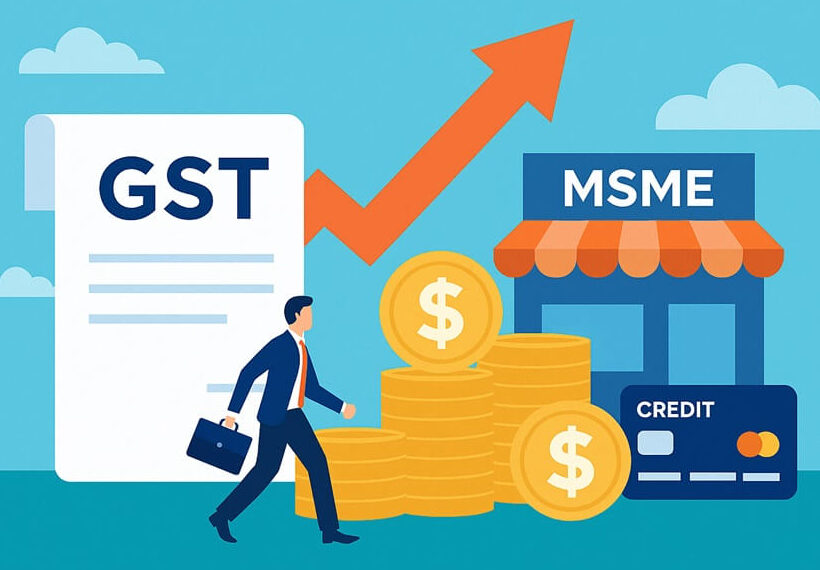
GST impact on MSMEs in India has been both transformative and challenging since its rollout in 2017. While GST improved transparency and compliance, it also introduced operational hurdles. Let’s explore how GST affects MSMEs from an Indian perspective.
Benefits of GST for MSMEs:
The GST impact on MSMEs in India includes several positive changes. First, it simplified the tax structure by merging various taxes like VAT and service tax. Therefore, businesses now deal with fewer tax authorities. In addition, GST introduced input tax credit (ITC), which helps reduce overall tax liability. For example, businesses can claim credit on taxes paid for raw materials. This improves cash flow and lowers costs.
Moreover, GST boosted transparency in the system. As a result, many MSMEs entered the formal economy. According to IBEF, over 13 million businesses registered under GST by 2023. This shows a shift toward organized business practices.
Compliance Challenges Faced by MSMEs:
However, the GST impact on MSMEs in India is not entirely positive. Many small businesses struggle with compliance requirements. Filing monthly returns can feel complex and time-consuming. In addition, digital literacy remains a challenge for some MSME owners.
Since GST is fully online, businesses must use digital tools regularly. Therefore, those without technical skills face difficulties. Moreover, working capital issues have increased in some sectors. Businesses must pay GST upfront and claim refunds later. This can create short-term cash flow pressure.
GST and Digital Transformation of MSMEs:
GST impact on MSMEs in India has accelerated digital adoption. Businesses now use accounting software and online filing systems. This shift improves transparency and efficiency. For example, e-invoicing and e-way bills streamline operations.
Moreover, digital records reduce errors and fraud risks. Over time, this builds trust with lenders and investors. In addition, GST data helps financial institutions assess creditworthiness. Therefore, MSMEs can access loans more easily. This supports business growth and expansion.
Future Outlook of GST for MSMEs:
Looking ahead, the GST impact on MSMEs in India will continue to evolve. The government is working to simplify return filing and compliance processes. Therefore, small businesses may find it easier to operate. Moreover, initiatives like GST composition schemes offer relief to smaller firms.
These schemes reduce tax rates and compliance burden. As a result, micro businesses can focus more on growth. In addition, policy reforms and digital awareness programs will help MSMEs adapt better. Over time, this will strengthen India’s small business ecosystem.
Conclusion:
The GST impact on MSMEs in India is a mix of progress and challenges. While compliance hurdles exist, long-term benefits outweigh the difficulties. With better awareness and policy support, MSMEs can thrive in the GST ecosystem. Explore more business and GST insights now!
– Ketaki Dandekar (team Arthology)
Read more about GST for MSME here – https://www.lendingkart.com/msme-gst